
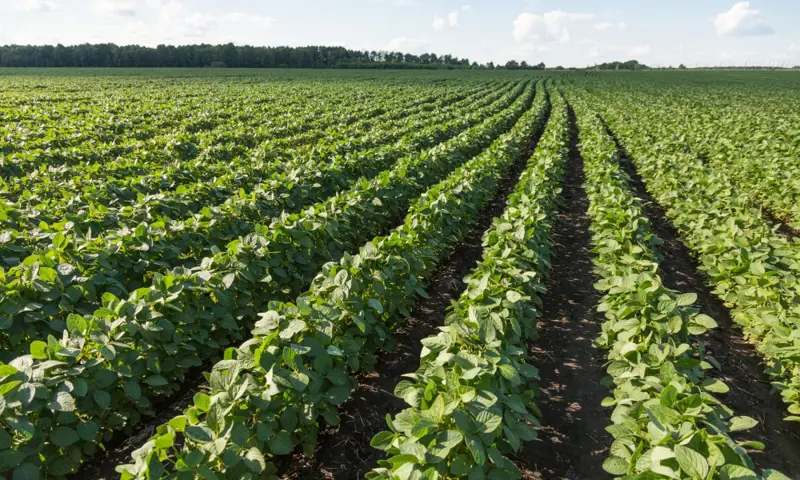
Clearing of natural land for farming commodity crops such as soya is among the leading causes of deforestation.
Bunge Global SA, a leading global agribusiness company, has agreed to report on deforestation and conversion risks in its supply chain and take immediate corrective action to protect tropical ecosystems. The commitment came in response to a shareholder proposal from six investors – Green Century Capital Management, AXA Investment Managers, Nordea Asset Management, Schroders, Storebrand Asset Management and UBS Asset Management – asking the company to address deforestation risks driven by its current policies.
In exchange for withdrawal of the proposal, Bunge also committed to 100 per cent geospatial monitoring for soy and enhanced disclosure of traceability for indirect suppliers (where soy is mixed from multiple farms). The report will cover both legal and illegal deforestation, as well as native vegetation conversion, or the repurposing of wild land for agriculture.
In 2021, Storebrand and Green Century filed a shareholder resolution asking Bunge to accelerate efforts to eliminate conversion from its supply chain, which received a 98 per cent majority vote with support from the board. Although the company had already committed to eliminate deforestation by 2025, investors remained concerned that its 2025 “cut-off date”, which allows the company to buy crops from land deforested through the end of 2025, effectively incentivises a race to deforest until that date.
- Bunge’s 2025 target is fine, but without a cut-off date in the past, there is a risk that farmers will rush to clear forests for new fields before the deforestation ban kicks in, notes Vemund Olsen, Senior Sustainability Analyst at Storebrand Asset Management. - We’re glad to see that Bunge has committed to report on the risk of inadvertently incentivising deforestation and we hope the company will take appropriate corrective action.
Deforestation and native vegetation conversion degrade ecosystems such as the Cerrado savanna in Brazil that are critical to preserving biodiversity and mitigating climate change. Soy production is a leading cause of negative vegetation conversion in South American habitats and contributes to a broader decline of South American wilderness.
The agreement marks a new phase in the multi-year deforestation engagement with Bunge. The investor group plans to continue its dialogue with the company on these and connected issues, and on the fulfillment of Bunge’s most recent commitments.
Storebrand is hopeful that Bunge will achieve deforestation and conversion-free supply chains as soon as possible and contribute to lift the agribusiness sector as a whole.