
To address the risks to the health of our planet, the scientific evidence implies that a huge mobilisation of private sector capital is needed to shift companies and their activities towards new systems of value creation aligned with sustainability.
This means stewardship responsibilities – engaging with companies to ensure that they have (and follow) credible transition plans – as well as investiment in solutions.
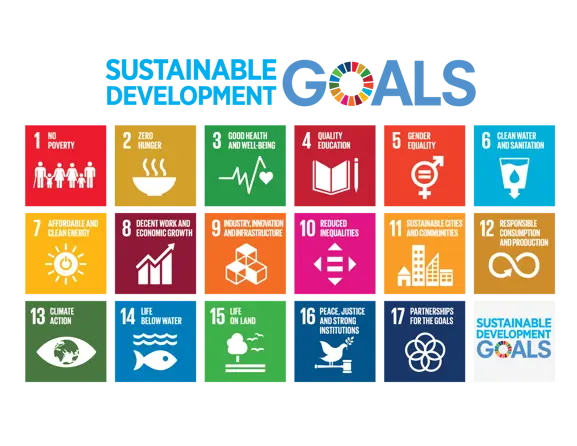
The SDGs, outlined in the United Nations 2030 Agenda for Sustainable Development (Agenda 2030) and adopted in 2015, provide an internationally recognised framework for sustainability. For global companies, they outline a common development agenda towards 2030 and highlight key business risks and opportunities. They also address all major areas of sustainable development, from healthcare and water use to climate, urban development, corruption and gender equality.
Our approach aims to ensure that our investments contribute to achieving the SDGs by allocating more capital to companies providing products and services that deliver the goals, without causing harm or an adverse impact on society and the environment.
Challenges and dilemmas
Unfortunately, pathways to SDG alignment aren’t always clear and obvious. Reaching sustainability objectives often involves dilemmas and potential trade-offs. Examples include the need to urgently develop sources of renewable energy without destroying nature or jeopardising indigenous peoples’ ways of life.
The rise of violent conflict around the world also risks creating conflicting priorities. Growing geopolitical tension, for example, has sparked a rush by nations to secure raw material and energy resources. Against this backdrop, governments face immense pressure to expand the production of fossil fuels and invest in activities such as seabed mining, which risks potentially catastrophic consequences for marine ecosystems and climatic conditions.
In the past few years, the consensus on using the SDGs as a framework for defining sustainable transition targets and identifying solutions has met with political resistance, primarily in the United States but also from certain constituencies in Europe.
This appears to be leading to a fragmentation of the approach taken by some financial institutions, primarily US-based ones. It has also made the task of influencing fossil-fuel-based companies towards investing in the energy transition, even more difficult.
This short-term resistance, however, does not change the fundamental scientifically-based rationale for our long-term transition and need for investment in the companies that will provide the products and services to deliver it.